
A not so brief hello.
On a love for Tuku, cultural dissonance, and the search for home. The makings of my villain origin story.

Hello and welcome to my corner of the internet. Below is a rather long post explaining why I set off on my current journey across Africa and why I started this newsletter. In the next few weeks, I hope to experiment with this space, find a format that works and possibly post twice a week. Let's see how it goes.
Oliver "Tuku" Mtukudzi is my all-time favourite artist.
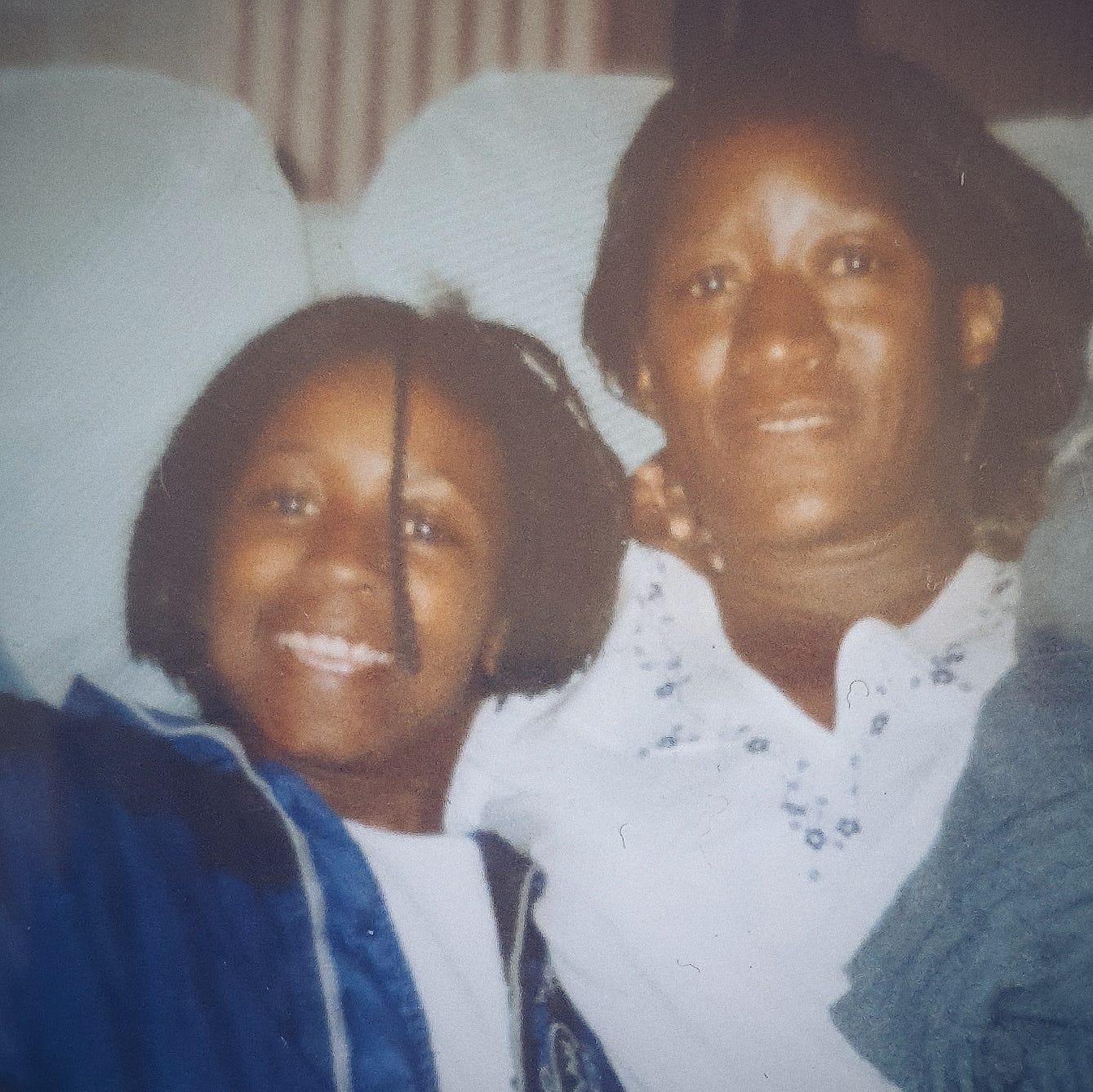
My love for him can be traced to my childhood, as is often the case with most things. After my parents separated, my little brother and I spent a lot of time on the road with my dad, traveling between my mum in Edinburgh in central Scotland and Great Yarmouth in the southeast of England, where my dad lived. My role in the passenger seat was to keep my dad awake. When I became too sleepy for conversation, we turned to the radio.
"A song should take you far down the road, several miles," my dad would say, meaning I shouldn't pick three-minute songs. Often, that meant choosing a Tuku CD with all of my dad's favourite songs that we would have burned on the PC. It follows then that my favourite Tuku song, Shanda, is 7 minutes and 37 seconds long. (The average length of the songs on the Shanda album is 6 minutes 54 seconds, my next favourite on the album “Mutavara” is 10 minutes 34 seconds long.)
This past December, while on holiday in Cape Town, I was walking hurriedly through a market where I found myself to be one of the few black people there when I heard Tuku's voice through the speakers. It's rare to hear Zimbabwean songs outside my house unless other Zimbabweans are present. Tuku, however, had found success with sizable audiences in Europe and North America. Nevertheless, I never once heard Tuku played anywhere in Europe without Zimbabweans being present.* So this was new to me.
"Panorwadza Moyo" was the song playing, in a market full of white South Africans and me. I immediately found a seat, sat down, took out my phone, and called my brother. I felt at home.
On dissonance
Moving to the United Kingdom at the age of eight and being a child of divorced parents, I have always struggled with the concept of home. I find labels helpful in understanding things and myself. Recently I came across a new label, the term "1.5 generation," which describes children born in one country who migrate to another country between the ages of six and twelve - that's me!
This struggle for belonging for the 1.5-generation is unique because of the in-betweenness that can result from their group’s early socialisation in the country of origin, followed by their formative adolescent years taking place in the [host] country… Many find comfort in the idea of belonging ‘everywhere,’ but this can also be a source of anguish, especially when facing exclusion by several groups that a person (wrongly) felt that he/she belonged to.
Sewite Solomon Kebede - The struggle for belonging.
1.5 generation immigrants are usually bilingual and bicultural, capable of navigating multiple cultures. However, unlike first-generation immigrants who move to a new country as adults or second-generation immigrants who are born in the country their parents migrated to, the 1.5 generation straddles an in-between space that brings identity challenges and struggles to fit in.
My dad, a traditional Shona man, was fiercely intentional about instilling the concept of home in us which like most migrant families led to us living in one culture at home and another at school. He wanted us to know that home was Zimbabwe, home was our rural homestead in Chivi, an hour's drive from the city of Masvingo, which I didn't visit until I was 21 and lastly home was whichever house he lived in.
I, knew Zimbabwe to be home as I was born there, attended my first two years of primary school there, and most importantly, through contrast with the strange country I found myself in at eight years old. This however did not mean I felt Zimbabwean, I don't think many eight year olds concern themselves with identity in such a away.
Assimilation in the new country was further made difficult as my working-class migrant parents wanted "the best" for me and my brother, and this often meant we attended "rich kids" schools. The experiences of the other kids were so different from mine that engaging in conversation or any activity was painfully difficult for me. So introverted, and quite shy, little me took the role of an observer.
None of the other children listened to Tuku. None of the other children went to church a minimum of three times a week. None of the other kids had sadza or rice for dinner everyday. None of the other kids were on the road for hours on end going between parents or to weekend-long church conferences. We didn't go on many holidays; I'm tempted to say any, but my memory might be failing me—the other children seemed to always go on holidays. There were differences in culture and economic class.
So as a child, in every space I entered outside of my mother's house, the goal, unintentionally, became to blend into the background. To just be there and to only respond, mirror those around me and ensure the conversation continued away from me.
Over the last 20 years, much has changed. Home became less and less the country I was born in and more my mother's house in Edinburgh where we have lived for the last 20 years.
One thing that has remained the same is the feeling of not fitting in.
In adulthood, I have perfected the art of performance. In spaces outside of my family, I still mostly only observe. I shy away from divulging too much about my personal experience, mirroring those around me and most importantly ensuring I remain agreeable. A recent change which I suspect to be a result of returning to the office after two years of working from home, is my inability to "English" at random parts of the workday. Sometimes it's having words escape my mind, but most times it's my brain's refusal to participate and to translate myself into Englishness, or should I say Britishness
The search for home
So, to get to the chase, this year I quit my job and booked a one-way ticket to South Africa in chase of that moment when I heard my favourite artist being played so casually, without fanfare and frill, out in the wild. I wanted to experience not having to translate myself, not being the odd one out and not having to English.
I have been in Africa for two months now and lived briefly in three countries. Quite obvious is that I don’t quite fit in here too, especially not in my country of birth. Such is being a 1.5er.
In that realisation, I discovered something more. In writing, I can be myself without performing. I can go on forever about my love for Tuku or how I felt when I heard "Bvuma" being played in a chapa (minibus) in Mozambique. I can record the joys and fears that come with traveling alone in Africa as a woman and also grapple with my identity and dreams unabashedly.
Through this newsletter, I hope to find kindred spirits who are on journeys of self-discovery and those who revel in pondering the connections between what's around us and who we are, individually and collectively.
So, every week, I'll share my thoughts. You can look forward to letters about ice cream made from maize meal, the weird quirk of finding home in xenophobic spaces, musings on how language influences personality, questions on why Southern African food is so bland, and thoughts on aesthetics—many thoughts on aesthetics, art, fashion, architecture, and more. All this, of course, inspired by my experiences traveling through Africa.
*Friends in the UK and beyond will know that Nando's is my go-to restaurant, whatever the occasion; it's practically home. Just before hitting send on this letter, I realised that Tuku is played all the time in Nando's. I've never been able to explain why I like Nando's so much; the food isn't that great. It seems, then, that I am most comfortable in public places when Tuku is in the background. Tuku here represents parts of my identity tied to my Shona culture that do not exist outside my house in my day-to-day life in the UK - at least that’s what I think my therapist would say.
If you read this far, thank you. Before you go, please share with me (reply to this email or comment below) what home means to you - is it a place, a person, food or feeling? Are you a fellow 1.5er?
This week
I am listening to: Anyalze Love (album) by Nigerian singer Azekel - “Love & Death, Pt 2” and “Learn to Love'' are on repeat. The interludes remind me of The Miseducation of Lauryn Hill.
I am reading: “In My Father’s House: Africa in the Philosophy of Culture” by Kwame Anthony Appiah and “Kitchen Confidential” by Anthony Bourdain.